Business Panel Replacement Orange County: Stay Up to Code
Commercial buildings in Orange County bring more load today than they did a decade earlier. Occupants include servers, compressors, ovens, EV battery chargers, and process equipment. Lighting controls are smarter, mechanical systems draw greater inrush current, and life security gadgets should coordinate reliably. When an electrical panel that when appeared sufficient starts running hot or tripping under everyday need, it ends up being more than a problem. It is a code concern, a dependability problem, and, if neglected, a genuine service risk.
An electrical panel is the nerve system of your building. When it is obsoleted or misapplied, every department feels it. The store that can not run its point-of-sale due to the fact that a breaker tripped, the cold box that warms up overnight after a neutral issue, the medical suite that misses out on visits since a tenant enhancement strained a subpanel. In Orange County, where assessment requirements are consistent and downtime is costly, a panel replacement done right spends for itself in prevented problems and in peace of mind.
What staying up to code in fact means here
Code compliance is not simply a pass or fail at evaluation. It is a set of real-world practices that decrease risk and keep insurance carriers and fire marshals satisfied. In this county, industrial jobs are reviewed under the California Electrical Code as adopted by the local authority having jurisdiction, together with the California Building Code for seismic anchorage and the local utility's service requirements. Various cities, from Anaheim to Irvine to Santa Ana, follow the exact same standard however can vary in plan examine submittals, inspection periods, and utility coordination.
The code questions that drive most industrial panel replacements are useful:
- Is the panelboard properly ranked for the readily available fault present at the service point, and is the short-circuit existing score recorded on the label as needed by NEC 110.24 and item standards?
- Does the panel have enough bus and breaker area for current and organized loads, utilizing load computations constant with NEC Short article 220 and any demand elements your jurisdiction accepts?
- Is working clearance kept per NEC 110.26, with doors that can open 90 degrees and appropriate depth, width, and headroom in front of the gear?
- Will overcurrent protective gadgets collaborate well enough that a fault at the end of a branch circuit will not drop a whole location? For emergency and lawfully needed standby systems, selective coordination requirements are tighter.
- Is seismic anchorage developed per California Building regulations, including bracing and anchorage information for the installing surface and enclosure?
If your Orange County electrician is strolling you through these points, you are on the ideal track. If you just hear "we will switch it for a new one," push for details.
When an industrial panel has actually reached the end
Panels do not age on a schedule. Conditions, environment, and use identify life. On the coast, salt air discovers its method into enclosures and starts a slow attack on bus bars and lugs. In light commercial spaces, airborne oils and dust build up, then serve as a blanket that traps heat. In workplaces, the problem is typically cumulative modification. Each occupant enhancement adds a circuit here, a transformer there, up until the original panel is overstuffed and undersized.
You can spot difficulty before it becomes immediate. The following list captures the warnings building supervisors and center engineers in Orange County report most often:
- Frequent problem tripping on otherwise healthy circuits, especially where numerous occupants share a panel.
- Warm areas on the deadfront or a faint "hot electrical" odor near gear rooms after heavy usage.
- Evidence of arcing or scorching around breaker stab connections, or staining of neutrals and grounds.
- Breakers that no longer reset strongly, or outdated types that are pricey and hard to source.
- Water invasion marks, rust on enclosure seams, or deterioration on bus and lugs, common in seaside zones.
Any among those is a reason to set up a professional evaluation. 3 or more normally suggests replacement preparation should start.
The brand names and vintages that trigger headaches
You will still find Federal Pacific Electric and Zinsco equipment in older industrial buildings across the county. Both lines are infamous for poor breaker efficiency and bus connection issues. While you may nurse them along with mindful upkeep, they are generally a liability in a commercial setting where downtime has real cost. Even some mid-era panels that are technically functional can decline modern-day breakers with greater disrupting rankings, which becomes an offer breaker when the energy upgrades the transformer and your available fault present rises.
I have walked into panels in Tustin and Costa Mesa where the primary looked fine but the bus fingers were brittle or pitted. Put a thermal electronic camera on it during a warm day, and you would see hotspots 20 to 30 degrees above ambient around the heaviest loads. You can tighten lugs and replace a few breakers, however you can not reverse metal fatigue. At some point, the most safe and most economical choice is a scheduled replacement.
Load computations that reflect reality, not hope
A proper panel replacement starts on paper. Commercial loads seldom match what the old panel schedule states. Renters alter, devices progresses, and a motor that utilized to be 2 horse power gets swapped with a 5. Excellent electrical professionals construct the new style utilizing a present one-line diagram and a load summary, not the other day's assumptions.
That indicates:
- Verifying connected loads and responsibility cycles, and applying NEC Short article 220 approach correctly. For restaurants, that may consist of demand factors for kitchen area equipment. For workplaces, receptacle loads and conference rooms see peaks that require practical diversity presumptions. For shops, motor loads and their beginning currents drive breaker and panel ratings.
- Including recognized near-term additions. If an EV battery charger installation in Orange County is on your capital strategy, account for it now. Service entrance conductors, primary breaker size, and panel bus rating need to include that electrical vehicle charger or future occupant gear.
- Being honest about power quality. If you have a number of non-linear loads, plan for neutral sizing and harmonic mitigation. That may affect how you divided loads throughout phases or whether you add a K-rated transformer.
Load calculations are not an academic workout. In a Newport Beach retail plaza last summer season, the preliminary tally stated the 400 A service would be great after a panel replacement. A closer look at the real operating patterns revealed three roof plan systems frequently beginning together after need reaction occasions. We upsized to a 600 A service and avoided the nuisance trips the customer had coped with for years.
The fault existing puzzle and why it matters
One of the most typical surprises throughout a commercial panel replacement in Orange County is the offered fault existing number. Energies upgrade distribution devices gradually. A new transformer or a shorter service lateral can drive readily available fault current at your service entrance greater than it was when the structure opened. If your panel's short-circuit existing rating is listed below that value, you are out of code, and more notably, at risk.
You manage this a few methods:
- Select panelboards and breakers with sufficient interrupting score at the system voltage.
- Use series ranked mixes where allowed and recorded, matching specific breaker pairs that have actually been tested together to achieve a higher score. This only works when the specific devices and configurations are noted as a set by the manufacturer.
- In larger services, define distribution equipment that supports appropriate stand up to and disrupt ratings without counting on series scores, particularly where future modifications are likely.
On a Santa Ana light industrial replacement, the utility's potential fault current at the primary reached above 35 kA. The initial panelboard with 10 kA branch breakers was far out of its depth. The repair was a brand-new circulation panel with 65 kAIC rated primary and branch gadgets listed in series, paired with documented labeling at each panel as required. We also included a placard at the service to tape the calculated readily available fault existing and the date, pleasing the labeling requirement and making life simpler for the next technician.
Working area, ventilation, and the space everyone forgets
Gear spaces build up storage like magnets bring in iron filings. Boxes, ladders, janitorial materials end up within the working clearance. During a panel replacement, inspectors in Orange County will look carefully at 110.26 clearances. They also look at door swing and the course of egress. If the room is undersized, we might require to reorient gear or relocate to fulfill working area and devoted area requirements. It is much better to find that throughout design than at final.
Ventilation matters too. A panel running close to its score in a closet that traps heat will live a brief, unhappy life. Updating is the right time to attend to the mechanical conditions around the gear, whether through passive louvering or active ventilation that maintains reasonable ambient temperatures.
Seismic anchorage is not optional
California's building code needs seismic anchorage of nonstructural elements, including electrical equipment. For wall mounted panelboards, that indicates confirming the wall building, anchor types, and spacing. For flooring mounted switchboards, it suggests proper anchors into the slab and, sometimes, seismic snubbers. Plan check reviewers in Orange County will look for stamped anchorage information, and field inspectors will search for the ideal hardware. Skipping this is an invitation to a correction notice.
Selective coordination, arc energy, and the information that protect uptime
In most commercial spaces, you want faults to clear in your area without taking down a feeder or the primary. Thoughtful choice of trip settings on electronic breakers and the right time existing curves go a long way. In facilities with emergency or lawfully needed standby systems, selective coordination requirements are specific and enforceable. Designers ought to examine the curves and validate that upstream and downstream devices coordinate throughout the anticipated fault spectrum.
For bigger gear, if you have breakers 1200 A and above, arc energy decrease provisions may use. Techniques consist of zone selective interlocking, maintenance switches, or energy reducing journey units. While this often resides in switchboards rather than panelboards, if you are upsizing service it belongs in the conversation.
And then there is labeling. After a replacement, arc flash labels prepared under NFPA 70E assist your maintenance staff and service vendors comprehend the threat before they open a cover. It is a little expense compared to the clarity it brings on a hectic day.
Utility coordination and cutover planning
The action that separates a smooth replacement from a vacation is planning the cutover. Commercial loads do not tolerate surprises. Dining establishments have food in coolers. Data spaces host profits systems. Manufacturing lines have sequences and lockout treatments. A fully grown commercial electrician in Orange County will set up with the utility for meter pulls or service de-energization, collaborate any generator or short-lived power, and choreograph the switchover.
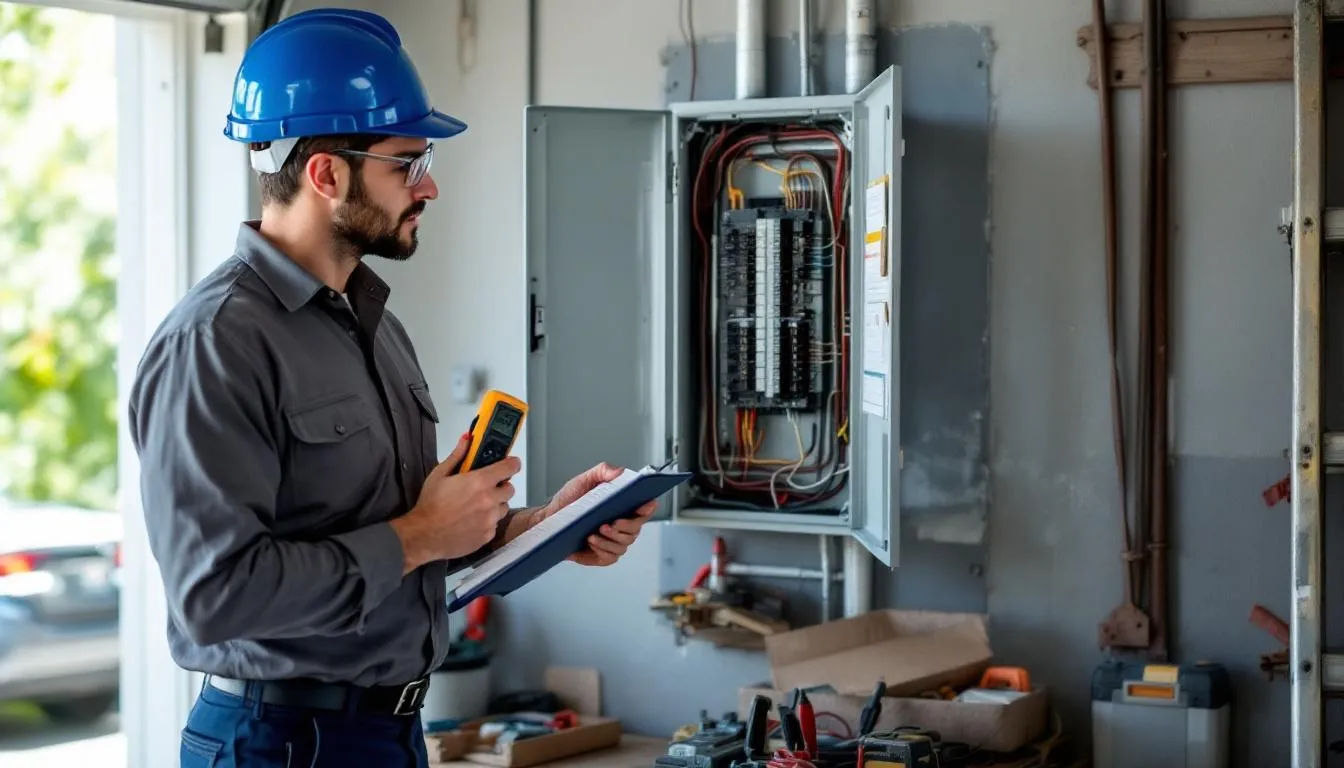
Here is the simple sequence that works well on a lot of tasks, from Mission Viejo to Fullerton:
- Evaluation and design. Load computations, fault current, one-line updates, anchorage design, and scope definition. Validate future needs like EV battery charger setup in Orange County or planned solar interconnection.
- Permitting and energy review. Send illustrations to the city or county, coordinate with the serving energy on service size, meter requirements, and cutover windows.
- Procurement and prefabrication. Order the panelboard or switchboard, verify breaker types, prepare labeling, and pre-build as much as possible to shrink interruption time.
- Cutover and screening. De-energize per strategy, perform safe lockout and verification, get rid of existing devices, set up new gear with correct torque values, land conductors with upgraded lugs if needed, and test megger results where appropriate.
- Inspection and documentation. Stroll the inspector through clearances, anchorage, labeling, and as-built updates, then deliver O&M files, updated panel schedules, and any arc flash labels.
For 24 hr operations, temporary power through a generator can keep critical loads alive during the window. In one Anaheim distribution center, we powered the conveyor PLCs and the server rack from a rental generator with a transfer switch while we replaced a worn out main and subpanel lineup. The shipping department satisfied its Monday morning target, and the brand-new equipment passed evaluation the very same day.
Budgeting and right-sizing the solution
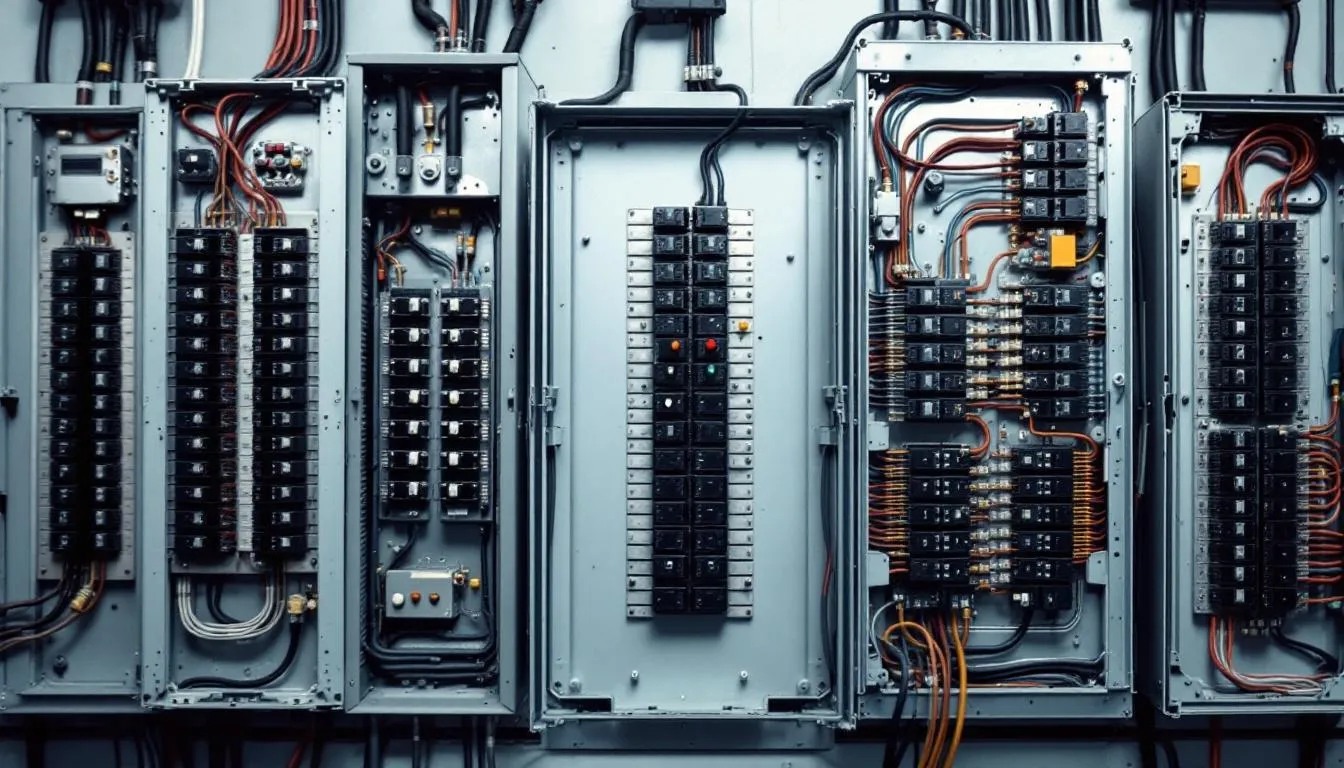
Costs swing extensively with scope. A like-for-like 225 A commercial panel replacement with very little feeder modifications and clean existing conductors might land in the low five figures. A service upgrade with a brand-new 600 A switchboard, energy coordination, new grounding electrode system, and numerous downstream panel changes can climb several times greater. The rate of product pricing likewise matters. Some breaker frames and enclosures have long preparations and premium expenses. A candid Orange County electrical contractor will show the allowances and the contingencies upfront.
Where spending plans are tight, a phased technique can help. Upgrade the service and primary distribution gear now, then change downstream panels throughout occupant turnover. Another tactic is reallocating loads across panels to extend life while preparing for a future combination. Be careful with short-term repairs that bake in long-lasting discomfort, such as adding several subpanels off a currently stretched main. What looks budget friendly now can become the reason you face repeating upkeep calls.
Tenants, TIs, and the panel that never ever sleeps
Commercial properties survive on change. New renters bring various loads. An imaginative workplace adds a recording studio, a dental practice adds imaging equipment, a ghost kitchen adds fryers. During a renter enhancement, panel schedules often get transformed rapidly to fulfill a buildout timeline. In time, that leads to mystery circuits, mislabeled breakers, and neutrals that share where they ought to not. A panel replacement is a possibility to reset the logic. Clean labeling, appropriate grouping of neutrals and grounds, and upgraded schedules cut troubleshooting time later. Your future self will thank you when an emergency electrician in Orange County arrives at 2 a.m. And can find the right circuit on the first try.
Environmental realities from the coast to the canyon
A panel on Balboa Peninsula lives a different life than one in Rancho Santa Margarita. Near the coast, define enclosures with surfaces that withstand deterioration and focus on gasketing. Indoors, guarantee the space stays dry and gets air changes. In locations with greater ambient dust, add a maintenance plan to burn out panels throughout arranged shutdowns, and think about filters on consumption louvers if you include ventilation. In light manufacturing, pay close attention to vibration. Mount panelboards on strong substrates, and use proper channel supports to minimize mechanical stress on terminations.
Integrating today's tech without overcomplicating it
Modern panels can serve more than simple branch circuits. If your building utilizes lighting control panels to satisfy Title 24 requirements, coordinate breaker assignments and spare capacity for those control transformers and contactors. If you prepare clever home design tracking at a commercial scale, request for metering modules or networked breakers where proper. Entire home rewiring is not the term we utilize commercially, however the concept uses when a suite or floor gets a complete gut and rebuild. Strategy feeders and panels so your next wave of innovation can plug in without tearing into primary gear again.
EV readiness is top of mind. Even if you do not install an electrical vehicle battery charger on the first day, area for future EV circuits in the lineup can save a return journey. It prevails now to set aside a feeder area and conduit path from the main gear to a future EVSE area. That future-proofing costs little today and a lot later if skipped.
Backup power is another subject that surfaces throughout panel replacements. If generator installation in Orange County is on your roadmap, this is the time to prepare transfer equipment and panel separation between emergency situation, lawfully needed standby, and optional standby loads. The finer points are worth getting right to keep fire marshal approvals smooth when you add the generator.
Safety, testing, and the worth of documentation
A great replacement ends with screening and paper that matches truth. Torque record sheets for lugs, insulation resistance test results on older feeders you plan to recycle, and infrared scans after preliminary load-in aid capture problems early. An electrical evaluation in Orange County will concentrate on craftsmanship and code points, however your internal documentation needs to go further. Updated one-lines, panel schedules with room and load descriptions that make good sense, and labeling that remains clear matter when a same day electrician in Orange County reacts to a call 18 months later.
I can not count the times clear labeling conserved an hour of investigator operate in a busy structure. It is the https://rentry.co/b2k8odao peaceful improvement that keeps your upkeep team on schedule.
Choosing the ideal partner for the work
There is a difference between an attire that can alter a breaker and one that can prepare and execute a business panel replacement with minimal interruption. Try to find a certified electrical contractor in Orange County who is comfy speaking about load calculations, short-circuit current ratings, coordination studies, and seismic anchorage. Ask about recent, comparable jobs in your city. An industrial electrical expert in Orange County should be fluent with regional energy procedures and examination norms.
If your home mixes usages, a residential electrician in Orange County can be practical for little suites, however for main equipment and service upgrades, an experienced Orange County electrical contractor with industrial depth is the safer bet. When outages are not a choice, a 24 hour electrician in Orange County who can stage work off-hours and bring short-term power can make the difference between a smooth weekend and an undesirable Monday.
Be cautious of rock-bottom bids that avoid design or count on long lead times without a clear plan. Budget friendly electrical experts in Orange County definitely exist, and the best electrical expert for your task is the one who keeps you on spending plan, communicates plainly, and passes assessment the first time. Top ranked electricians in Orange County earn that status by making the complex feel routine.
A short take a look at three common scenarios
A medical office in Irvine required more imaging. The existing 208Y/120 V panel serving the suite was complete, with a mix of lighting, receptacles, and a number of small motors. The occupant wanted to include a CBCT unit that required a dedicated 100 A circuit and had high inrush. We pulled a brand-new feeder from the structure's primary distribution, set up a dedicated panelboard with area for the imaging and assistance devices, and coordinated breaker types to avoid nuisance journeys. The structure remained in service, building covered on schedule, and the city inspector concentrated on clearances and labeling, both of which were ready.
A dining establishment in Huntington Beach upgraded its kitchen area. Fryers and a brand-new combi oven increased linked load considerably. The old panel was a mid-century Zinsco with brittle bus stabs. We scheduled a Sunday cutover, brought in a little generator to keep refrigeration live, replaced the panel with a modern-day 225 A system, redistributed loads throughout stages, and included GFCI defense for kitchen receptacles in compliance with code. Monday early morning, they brewed coffee on time.
A warehouse in Anaheim dealt with duplicated main journeys throughout peak season. An energy transformer upgrade had actually quietly raised available fault existing, and the old panel's series rated mix was no longer listed with replacement breakers. A new circulation panel with appropriately ranked gadgets, updated labeling for available fault existing, and a thoughtful take a look at selective coordination ended the cycle of inexplicable outages.
Don't forget maintenance after the ribbon cutting
New panels are not a set and forget item. Thermal cycling loosens lug connections over time, and dust sneaks in. Set up a retorque and thermal scan after the very first heavy season, then at reasonable intervals. For facilities with heavy non-linear loads, keep an eye on neutrals. For seaside properties, check for deterioration each year. When renters move, update panel schedules. These basic routines prevent little issues from becoming huge ones.
If something fails, quick response matters. Having a local electrical contractor in Orange County who knows your structure's layout, has the as-builts, and can perform electrical troubleshooting without guesswork reduces interruptions. Whether you call it Orange County electrical repair or emergency situation reaction, the best results start with good style and end with basic, disciplined maintenance.
The value of doing it right
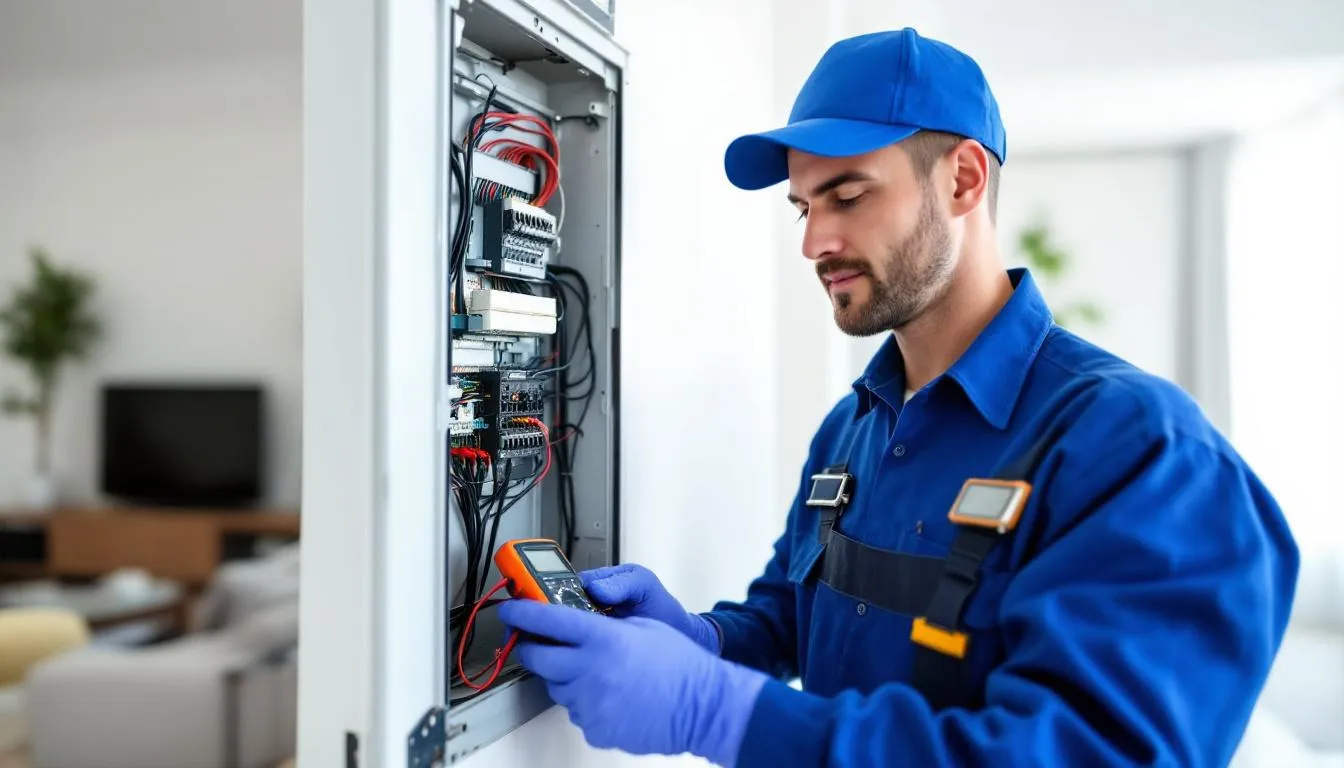
A commercial panel replacement is not attractive. It does not sell product, design your lobby, or wow a tenant. What it does is keep all of that running. It helps you meet insurance requirements, gives you space to grow, and lets your staff sleep on weekend cutovers. It keeps inspectors and energies pleased and keeps your brand off the nighttime news for the wrong reasons.
If you are seeing the warning signs, or if you are preparing brand-new loads that will push your equipment hard, talk with a knowledgeable Orange County electrician. Request a clear scope, a reasonable schedule, and a design that reflects how your structure really works. Whether your next step is a simple panel replacement in Orange County, an electrical panel upgrade across a number of suites, or planning for EV charger installation at your home, staying up to code is not just a checkbox. It is the structure for a building that works the method your tenants anticipate every day.